

The Era of "Prices to Devices" Is Here
Base Power’s $1B raise on August 3rd exemplifies a fundamental shift in the energy landscape: the move toward Prices to Devices.
For a century, the power grid operated as a one-way system: central power plants generated electricity, and homes consumed it passively at a flat, predictable rate. We are rapidly moving past that model. Today, real-time market signals—ranging from wholesale prices to hyper-local distribution constraints—are making their way directly to individual appliances inside the home.
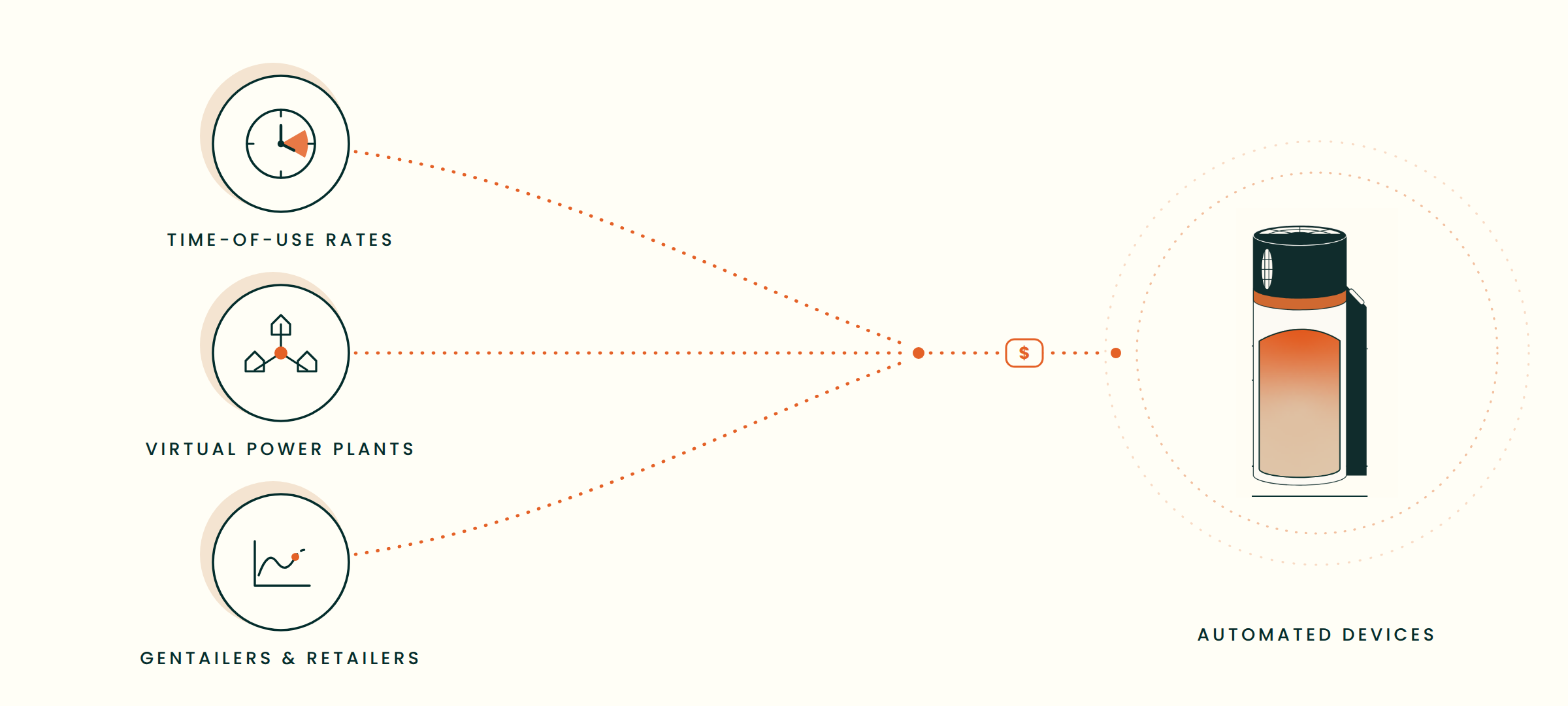
This shift is taking place under several different mechanisms:
- Time-of-Use (TOU) & Dynamic Pricing: Driven by state default mandates, the transition from net metering to net billing in solar, and EV/heat pump tariffs, total U.S. Time-of-Use rate adoption is projected to grow from ~15% today to 30%–35% of households by 2030.
- Virtual Power Plants & Aggregators (e.g., Renew Home, Sunrun): Software platforms group smart thermostats, batteries, and flexible building loads into Virtual Power Plants (VPPs) to shave peak demand for utilities, monetizing load flexibility at scale.
- Retail Power Providers & Gentailers (e.g., NRG Energy, Base Power): Next-generation energy retailers link distributed hardware—whether Base’s proprietary home batteries or NRG’s stacked third-party assets—directly to wholesale price signals to hedge spot-market volatility.
Whether you look at utility tariffs, VPP aggregators, or gentailers, they share the same objective: route dynamic price signals directly to automated end-loads and unlock financial value that flat rates leave on the table.
A 45-Year-Old Idea Whose Time Has Come
Sending "prices to devices" isn’t new. In 1980, MIT’s Fred Schweppe pioneered the concept of real-time pricing automatically driving smart appliance response. Today, the necessary conditions have finally converged:
- Technological Foundation: Universal connectivity, low-cost microprocessors, and open communication protocols now allow real-time price signals to be broadcast effortlessly and executed instantaneously at the device level.
- Rapidly Evolving Grid: Cheap and fast-to-install but non-dispatchable renewables, exploding AI data center loads, climate adaptation, and aging asset replacement costs are driving load growth, grid stress and rate increases.
- Evolving Consumer Preferences: A bifurcated market—driven by early adopters eager to electrify and automate, alongside mainstream homeowners focused squarely on lowering monthly energy bills–is receptive to dynamic pricing.
While these conditions are unlocking price-to-device adoption today, the variety of market mechanisms (TOU, VPP, Gentailer) and inherent fragmentation of energy markets disguise the true magnitude of this trend.
Energy market fragmentation is structural—with thousands of utilities, ISOs, and regulators, there will never be a single monolithic prices to devices framework. That fragmentation will persist across TOU tariffs, VPP aggregation, and direct utility programs. But the inexorable trend is volume: the percentage of U.S. households receiving dynamic prices to devices will surge dramatically over the next 5–10 years and continue growing after that.
Intelligent Infrastructure and the Cala Platform
This structural shift is precisely why we built Cala.
Water heaters are the ultimate thermal battery. Accounting for roughly 18% of residential energy consumption, domestic water heating offers massive, flexible thermal storage that can absorb or shed electrical load without compromising homeowner comfort.
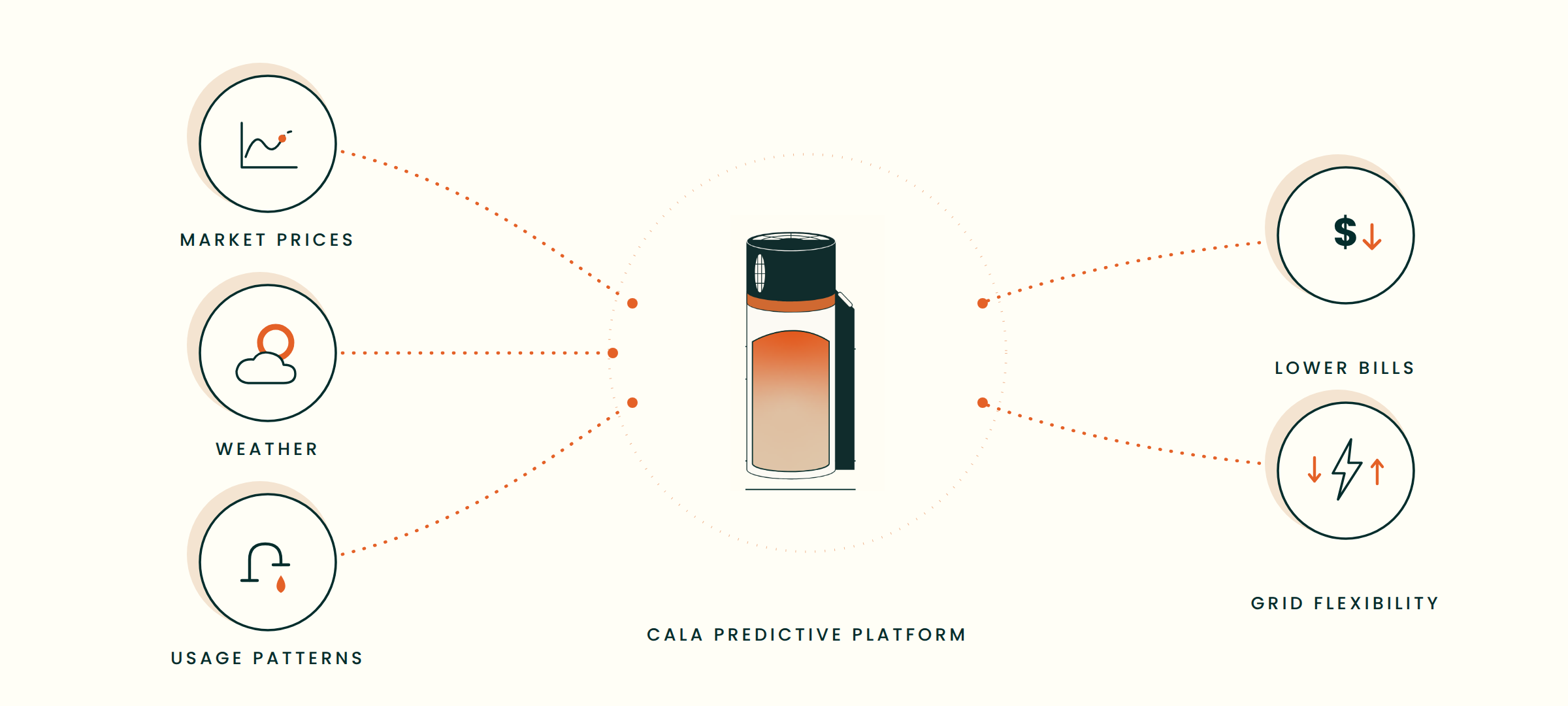
We designed the Cala heat pump water heater from the ground up for the "prices to devices" era. Cala’s platform ingests dynamic market signals, weather forecasts, and historical household water usage patterns to predictively optimize heating cycles around cheap, clean power. It acts as a market-aware physical asset—enabling utilities, gentailers, and aggregators to unlock real financial value at the device level.
The future of the home isn't just about higher efficiency—it’s about built-in intelligence. Cala is purpose-built for this moment, delivering essential home infrastructure that seamlessly adapts to the user's lifestyle while responding intelligently to the world outside.


.jpg)